
Keep Family and Guests Safe This Winter: Snow and Ice on Pavers, Stamped Concrete and Pool Decks





Between Thanksgiving and New Year's, more people walk up your driveway and steps than at any other time of year: grandparents, kids, neighbors carrying a dish. The first snow and ice usually arrive right in the middle of it.
Keeping those paths clear is about safety first. It's also about protecting the surfaces you invested in. Much of the winter damage we see on pavers, stamped concrete and pool decks doesn't come from the snow itself. It comes from the way the snow was removed and the product used to melt the ice.
Here is how to keep walkways safe all season without leaving scratches, chips or loose pavers behind.
What tools are safe for pavers and stamped concrete?
Plastic or rubber-edged shovels, push brooms and properly adjusted snow blowers. Metal edges and ice picks do most of the damage.
Do:
- Use a plastic shovel, or a shovel with a plastic or rubber edge.
- Use a push broom for light snow, especially on stamped and sealed concrete.
- On snow blowers, adjust the skid shoes so the scraper bar rides slightly above the surface instead of dragging on it.
- If a plow service clears your driveway, ask about a rubber or polyurethane cutting edge and a slightly raised blade over pavers.
Don't:
- Don't use metal-edged shovels on pavers, natural stone or decorative concrete. They scratch sealer and can catch paver edges.
- Don't use ice picks, chisels or axes to break up ice. They chip and crack the surface.
- Don't scrape a frozen, compacted layer down to the surface. Treat it and let it soften instead.
When is the best time to shovel?
Early and often. The easiest snow to remove is fresh snow. Once it is walked on, it compacts and freezes into ice that is much harder to clear safely.
- Clear patios, walkways and steps during longer storms, not just at the end, especially on days you expect visitors.
- On pavers, shovel along the direction of the joints when possible so the blade is less likely to catch an edge.
- Keep a broom by the door for the light dusting that falls overnight.
Which de-icer is safest for pavers and concrete?
Calcium magnesium acetate (CMA) is one of the gentlest, and magnesium chloride is a good middle ground. The product in the bag makes a big difference for both your surfaces and the people walking on them.
One rule applies across the board: avoid de-icers that contain ammonium nitrate or ammonium sulfate. These chemically attack concrete and can cause serious damage. Always read the label, not just the front of the bag.
New concrete needs extra care. Most concrete industry guidance recommends not using any de-icing salt during its first winter, usually the first 12 months after it is poured. If your driveway, patio or pool deck was installed this year, use sand for traction and shovel promptly instead.
How do you remove ice without damaging the surface?
Treat it lightly, let it loosen and push it off. Skip the hammering:
- Remove loose snow first so you can see what you're dealing with.
- Apply a de-icer lightly. A thin, even scatter works better than piles; extra product doesn't melt more ice, it just soaks into the surface.
- Wait for the ice to loosen, then push it off with a plastic shovel.
- Push the slush off the patio or walkway so it doesn't refreeze in place.
- Use sand on steps and walkways when you need traction without more de-icer.
Is stamped concrete slippery in winter?
It can be. Sealed stamped concrete looks great, but a glossy sealer can get slick when wet or icy. During winter:
- Keep steps and entry paths especially clear before guests arrive.
- Use sand on the areas people walk on most.
- When it's time to reseal, ask about adding an anti-slip additive to the sealer, a small change that improves traction all year.
How do you protect a pool deck in winter?
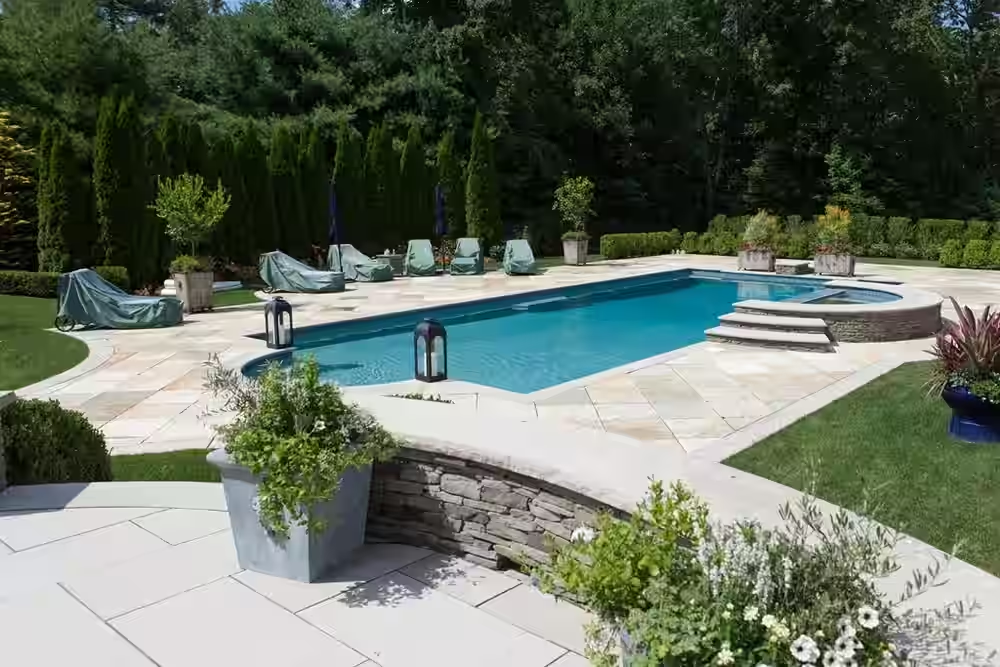
A closed pool still sits in the middle of the yard all winter, and kids visiting for the holidays are drawn to it.
- Don't push salty slush or de-icer into the pool or onto the pool cover. It can affect the water and the cover.
- Keep snow piles off the coping and away from the pool edge.
- Avoid metal tools on pool deck pavers and coping stone.
- Walk the deck after big storms to check for damage before spring opening.
If your pool deck already shows cracks, loose pavers or worn finishes, winter is a good time to plan a pool deck upgrade or replacement for next season.
Where should you pile the snow?
Where you pile snow matters as much as how you move it.
- Don't pile snow against the house, on top of seating walls or in garden beds next to the patio.
- Keep drainage paths clear so meltwater can flow away instead of refreezing on the walkway.
- Watch your downspouts. If they empty onto a walkway or patio, they can create the same ice patch every night. Redirecting them is often an easy fix.
What should you do if a paver lifts in winter?
Leave it alone until spring. Sometimes a paver lifts slightly in winter as the ground freezes. Don't try to pry it back down or chip around it while frozen. Mark it so guests can see it, and check it in spring. Pavers that move every winter usually point to a base or drainage issue, and that is worth fixing properly.
Rather not shovel at all?
If you live near Boxborough, PCA Outdoor Living also offers snow plowing and snow removal for homes and businesses, so the driveway is clear before the family arrives.
What should you check in spring?
Once the snow melts, take a walk around your outdoor spaces:
- Look for chips, scratches or flaking on concrete and stone
- Check for sunken, lifted or loose pavers
- Sweep and replace joint sand where it has washed out
- Rinse off leftover salt and grit
PCA Outdoor Living builds paver and stone hardscapes and concrete patios, walkways and pool decks designed for Massachusetts winters, with solid bases, proper slopes and drainage planned from the start.
Frequently asked questions
What is the safest ice melt for pavers and concrete?
Calcium magnesium acetate (CMA) is one of the gentlest options. Magnesium chloride and calcium chloride are good alternatives when used in moderation. Avoid products with ammonium nitrate or ammonium sulfate.
Can I use a snow blower on pavers?
Yes. Adjust the skid shoes so the scraper bar sits slightly above the surface, and consider a blower with a rubber or plastic scraper.
What kind of shovel is best for stamped concrete?
A plastic shovel or one with a rubber edge. Metal edges can scratch the sealer and the stamped texture.
Can I use salt on new concrete?
It's best not to. Most guidance recommends avoiding de-icing salts during the first winter after the concrete is poured. Use sand for traction instead.
Why do my pavers lift in the winter?
Water in the soil or base freezes and expands. Pavers that lift every year often have a base or drainage problem that should be corrected.
Planning to fix winter damage this spring? Contact PCA Outdoor Living for a free consultation.